
KRR AUTOCLAVES | DEFENSE COMPOSITE PARTS
Autoclave for Defense Composite parts
Defense composite manufacturing demands more than a standard industrial autoclave. It requires a controlled curing system capable of producing lightweight, high-strength and mission-ready composite parts with repeatable mechanical performance. KRR Autoclaves designs and manufactures custom-engineered autoclaves for defense composite parts such as radomes, UAV structures, drone airframes, missile and launcher components, ballistic protection panels, naval composite structures, aerospace brackets, fairings, covers, casings and advanced CFRP/GFRP laminates.
In defense applications, every cured component must perform under demanding service conditions such as vibration, impact, thermal cycling, moisture exposure, pressure variation, electromagnetic requirements and long operational life. This is why the curing process must be controlled with accuracy from lay-up loading to vacuum hold, pressure ramp-up, heating, dwell, cooling, depressurization and final cure documentation. KRR builds each autoclave around the customer’s part size, tool mass, resin system, prepreg specification, cure cycle, production volume, inspection requirements and applicable quality standards.
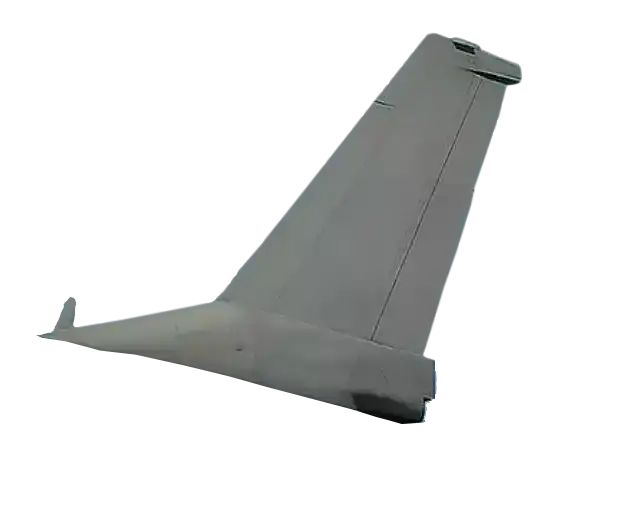


Autoclave for Defense Composite Parts Built for Mission-Critical Cure Quality
An Autoclave for Defense composite parts must deliver uniform heat transfer, stable pressure control, reliable vacuum performance and accurate cure-cycle repeatability. Defense composite parts are often thick, complex, multi-layered or tool-heavy. If the cure cycle is not controlled correctly, the final part may face voids, resin-rich areas, dry spots, weak bonding, dimensional variation, porosity or inconsistent laminate consolidation. For defense programs, these issues can affect not only product quality but also qualification, reliability and long-term field performance.
KRR Autoclaves focuses on the complete curing environment, not only the pressure vessel. The system can be engineered with high-efficiency air circulation, optimized ducting, multi-zone heating, calibrated temperature sensors, component thermocouple monitoring, pressure control, vacuum manifolds, vacuum measurement, PLC-based automation, SCADA supervision, recipe management, alarm handling, door safety interlocks, emergency venting and automatic cure report generation. This allows manufacturers to maintain process discipline for critical composite parts used in defense, aerospace, UAV, missile, naval and advanced technology programs.
Defense composites are selected because they combine strength, stiffness, low weight, corrosion resistance and design flexibility. However, the performance of the material is achieved only when the laminate is cured correctly. During autoclave curing, vacuum helps remove trapped air and volatiles from the laminate, while external pressure consolidates the plies and controlled heat activates the resin system. The result is a stronger, denser and more repeatable composite structure suitable for demanding defense applications.
KRR autoclaves can support a wide range of defense composite manufacturing needs, including carbon fiber prepreg curing, glass fiber composite curing, hybrid composite laminates, sandwich panels, honeycomb structures, radar-transparent radomes, lightweight UAV parts, structural covers, fairings, armoured composite panels and high-temperature polymer matrix composites. Each system is configured based on actual process needs rather than a generic catalogue model.
For defense manufacturers, traceability is as important as cure performance. KRR systems can be configured to record temperature, pressure, vacuum, part thermocouple data, ramp rates, dwell time, alarms, operator actions and cycle history. This helps quality teams review every cycle, compare actual values against approved recipes and maintain documentation for internal audits, customer inspections and program qualification requirements.
Temperature uniformity is one of the most critical factors in defense composite curing. Large tools, thick laminates and uneven loading can create thermal lag between chamber air temperature and actual part temperature. KRR can design autoclaves with suitable airflow direction, blower capacity, heater zoning, insulation, baffle arrangement and part temperature monitoring to improve cure consistency across the working zone. This is especially important for radomes, UAV skins, missile-related composite parts, ballistic panels and large defense structures where dimensional stability and mechanical performance cannot be compromised.
Pressure and vacuum control also require careful engineering. Stable pressure improves laminate consolidation and helps reduce void content, while reliable vacuum management supports degassing and bag integrity during the cycle. KRR can provide multi-vacuum line arrangements, individual vacuum monitoring, resin trap provisions, leak-check support, pressure safety systems and interlocked operating logic to protect the part, operator and equipment.
KRR’s advantage comes from combining pressure vessel manufacturing strength with aerospace composite process understanding. The autoclave is engineered as a complete production system, including mechanical design, pressure boundary fabrication, heating and cooling, airflow, vacuum, instrumentation, automation, safety systems, FAT support, installation and commissioning. This integrated approach reduces coordination gaps and gives defense composite manufacturers a dependable partner from design discussion to production use.
A defense composite autoclave should not be selected only by chamber size and price. The right system must protect expensive prepreg material, precision tooling, customer-approved cure cycles, production schedules and final component reliability. KRR Autoclaves helps customers define the right working diameter, length, pressure, temperature, heating rate, cooling rate, vacuum arrangement, control philosophy, loading method, trolley design, utilities and documentation package based on the real application.
For organizations developing indigenous defense platforms, UAVs, aircraft structures, missiles, naval systems, radar systems and advanced composite assemblies, KRR Autoclaves delivers world-class curing systems engineered for precision, repeatability and long-term production confidence.
Choose KRR Autoclaves for defense composite curing systems that are custom-built, process-focused and ready for mission-critical manufacturing.